
The Bolivarian Republic of Venezuela has been experiencing a multi-faceted crisis for over a decade, characterized by political instability, economic collapse, and a humanitarian emergency. This protracted downturn has profound implications for its citizens and the wider Latin American region. To understand the current situation, one must dissect the layers of interwoven challenges that have brought the nation to its knees.
Venezuela’s political arena is a primary driver of its ongoing crisis. The country operates under a presidential system, but the legitimacy of its current head of state remains a deeply contested issue both domestically and internationally.
The Maduro Presidency and International Recognition
Nicolás Maduro assumed the presidency in 2013 following the death of Hugo Chávez. His tenure has been marked by escalating authoritarianism and systematic erosion of democratic institutions. The 2018 presidential election, in which Maduro was re-elected, was widely condemned by numerous international bodies and countries, including the United States, the European Union, and the Organization of American States, as illegitimate due to alleged irregularities, lack of opposition participation, and an unfair electoral playing field. This condemnation led to a significant rift in international relations, with many nations recognizing Juan Guaidó, then head of the National Assembly, as the interim president in early 2019, invoking constitutional provisions for presidential succession. This dual recognition created a unique and complex power struggle, a diplomatic tug-of-war for Venezuela’s institutional soul.
Weakening of Democratic Institutions
The judiciary, typically a bulwark against executive overreach, has been increasingly perceived as subservient to the executive branch. The Supreme Tribunal of Justice (TSJ) has frequently ruled in favor of the government, often against the National Assembly when it was under opposition control. This erosion of judicial independence, much like rust corroding a vital gear, has hampered any genuine checks and balances on presidential power. Similarly, the National Electoral Council (CNE), responsible for overseeing elections, has faced allegations of bias and manipulation, further undermining public trust in the electoral process.
Crackdowns on Dissent and Human Rights Concerns
The government has been accused of systematic human rights violations, including arbitrary detentions, torture, and extrajudicial killings of political opponents and protesters. Nongovernmental organizations and international bodies like the United Nations have documented extensive abuses, highlighting a pattern of repression designed to silence dissent. The curtailment of freedom of expression, evidenced by the closure of independent media outlets and the arrests of journalists, has effectively constructed a wall around dissenting voices, making it difficult for citizens to access unbiased information or freely express their views.
In recent developments regarding Venezuela’s ongoing challenges, a related article discusses the impact of satellite imagery on understanding the country’s environmental changes and urbanization. This insightful piece highlights how advanced technology can provide crucial data for both humanitarian efforts and policy-making. For more information, you can read the article here: Satellite Imagery and Its Role in Monitoring Venezuela’s Landscape.
Economic Collapse and Hyperinflation
Venezuela’s once-booming petroleum-based economy has suffered a catastrophic collapse, plunging the nation into an unprecedented economic crisis characterized by hyperinflation, severe scarcity, and widespread poverty.
Dependence on Oil and Mismanagement
For decades, Venezuela’s economic fortunes were inextricably linked to global oil prices. The country possesses the world’s largest proven oil reserves, and oil exports historically accounted for over 90% of its export earnings. However, a lack of diversification, coupled with alleged rampant corruption and mismanagement of the state-owned oil company, Petróleos de Venezuela S.A. (PDVSA), left the economy vulnerable. When global oil prices plummeted in 2014, the existing structural weaknesses were brutally exposed, like a poorly constructed building crumbling in an earthquake.
Hyperinflation and Currency Devaluation
Venezuela has experienced one of the most severe cases of hyperinflation in modern history. The bolívar, the national currency, has undergone multiple re-denominations, shedding millions of zeros in an attempt to re-stabilize its value, yet it continues to depreciate rapidly. This astronomical inflation, which reached over 1,000,000% annually at its peak, has obliterated the purchasing power of wages and savings. The erosion of the currency has effectively acted as a constant tax on the poor, making daily sustenance a Herculean task.
Resource Scarcity and Economic Contraction
The economic crisis has led to chronic shortages of basic goods, including food, medicine, and essential household items. Production across various sectors has plummeted due to lack of investment, emigration of skilled labor, and government policies that discourage private enterprise. Sanctions imposed by the United States and other countries, primarily targeting the oil industry and government officials, have further exacerbated the economic downturn, restricting access to international financial markets and limiting the country’s ability to import necessary goods. The economy has contracted year after year, shrinking to a fraction of its former size, leaving a desolate landscape of shuttered businesses and rampant unemployment.
Humanitarian Crisis and Social Impact
The political and economic crises have converged to create a dire humanitarian emergency, impacting every facet of Venezuelan society.
Food Insecurity and Malnutrition
Widespread food shortages and the prohibitive cost of what little food is available have led to severe food insecurity. Millions of Venezuelans lack reliable access to sufficient nutritious food, resulting in alarmingly high rates of malnutrition, particularly among children. This nutritional deficit, much like a pervasive disease, undermines the health and future prospects of an entire generation. Hospitals and public health services often lack basic supplies, hindering efforts to combat malnutrition and prevent other diseases.
Health Sector Collapse and Medical Shortages
The public health system has largely collapsed. Hospitals operate with chronic shortages of medicines, medical equipment, and adequately paid staff. Preventable diseases have re-emerged, and the ability to treat chronic conditions or emergency cases is severely compromised. Many medical professionals have left the country in search of better opportunities and safer working conditions, further depleting the already strained healthcare workforce. The lack of access to essential medications and treatments has made treatable illnesses potentially fatal, turning routine health concerns into life-or-death situations.
Mass Migration and Displacement
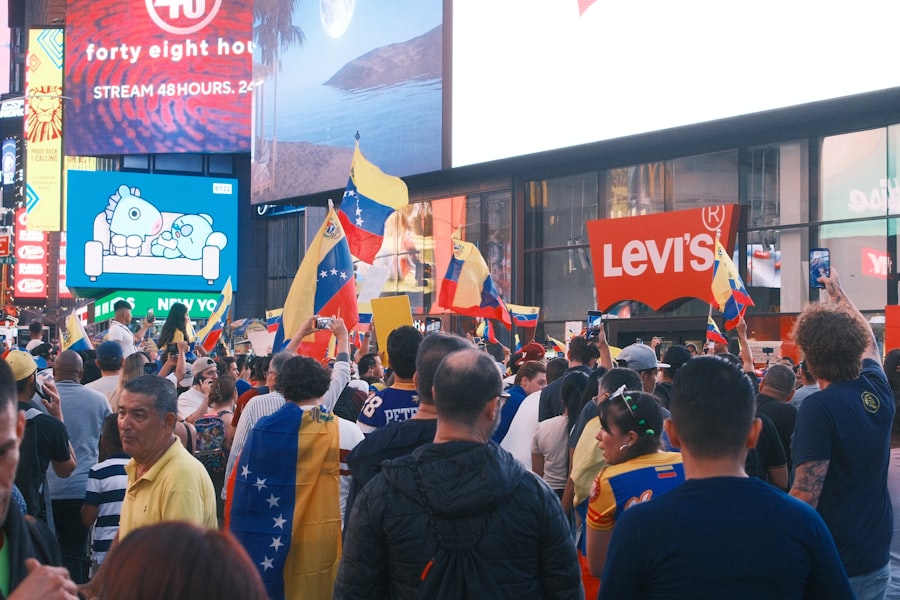
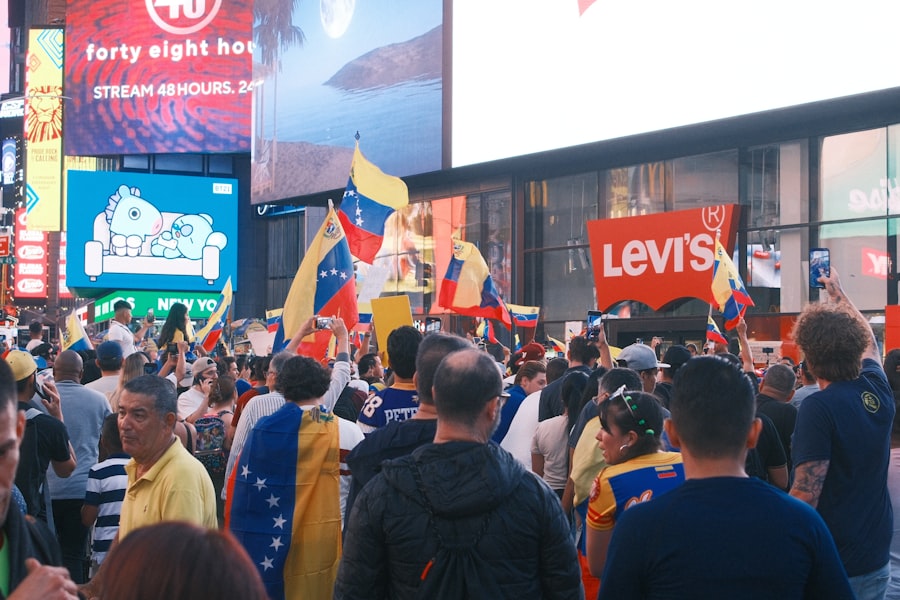
The deteriorating conditions have triggered one of the largest mass migrations in recent Latin American history. Millions of Venezuelans have fled their country, seeking refuge and opportunities in neighboring countries like Colombia, Peru, Ecuador, and Brazil, as well as further afield. This exodus has put immense pressure on host countries’ social services and infrastructure. The challenges faced by these migrants include xenophobia, exploitation, and difficulty accessing legal status and decent work, transforming a domestic crisis into a regional humanitarian burden. They are, in essence, the human ripples of a collapsing system.
International Relations and Sanctions
Venezuela’s crisis is not confined to its borders; it has become a central point of contention on the international stage, drawing in various global actors and policies.
US Sanctions Policy
The United States has implemented numerous rounds of sanctions against Venezuela, targeting the country’s oil industry, government officials, and financial institutions. The stated aim of these sanctions is to pressure the Maduro regime to restore democracy and hold free and fair elections. However, the effectiveness and ethical implications of these sanctions are a subject of ongoing debate. Critics argue that they exacerbate the humanitarian crisis by limiting the government’s ability to import essential goods and services, while proponents maintain they are a necessary tool to deprive an authoritarian regime of resources. Regardless of intent, these sanctions act as a formidable headwinds against any economic recovery.
Regional Responses and Diplomacy
Neighboring countries, particularly those in the Lima Group, have actively sought a peaceful and democratic resolution to the Venezuelan crisis. They have condemned the Maduro government’s actions, offered humanitarian assistance, and pushed for international recognition of Juan Guaidó. However, a unified and effective regional strategy has been challenging to achieve, with some nations maintaining diplomatic ties with Maduro and others adopting a more confrontational stance. The regional response is a patchwork quilt of intentions and capabilities, often stretched thin by the magnitude of the problem.
Role of Russia and China
Russia and China have maintained significant political and economic ties with the Maduro government, providing crucial support that has helped the regime withstand international pressure. Russia has been a key arms supplier and has offered financial assistance, while China has invested heavily in Venezuela’s oil sector and provided loans. Their vested interests in Venezuela’s resources and their geopolitical alignment with the Maduro government have complicated efforts by Western nations to isolate the regime and facilitate a democratic transition. Their presence acts as a counterweight, ensuring the crisis remains a multi-polar issue.
In recent developments regarding Venezuela’s political landscape, the country continues to face challenges that impact its economy and international relations. A related article discusses the implications of advanced technologies, such as nuclear-powered spacecraft, on global dynamics and how nations like Venezuela might navigate these changes. For more insights, you can read the article here.
Future Prospects and Potential Scenarios
The path forward for Venezuela remains highly uncertain, with several potential scenarios emerging from the current landscape of instability.
Potential for Political Transition
A peaceful political transition, achieved through internationally supervised free and fair elections, is widely considered the most desirable outcome. However, the government’s perceived reluctance to allow such elections, combined with a deeply fragmented opposition, makes this a challenging proposition. Any transition would require significant international mediation and guarantees for all parties involved, akin to navigating a minefield. The establishment of independent electoral bodies and the restoration of judicial autonomy would be critical preconditions.
Continued Stalemate and Escalation
Another scenario involves a continuation of the current political stalemate, marked by ongoing economic hardship and social unrest. This could lead to further erosion of democratic norms, increased repression, and potential for renewed cycles of protests and violence. A prolonged stalemate could deepen the humanitarian crisis, driving more people to flee the country and potentially destabilizing the wider region. This path represents a slow, agonizing descent, a perpetual twilight of despair.
International Intervention and Humanitarian Aid
The scale of the humanitarian crisis has prompted calls for increased international humanitarian aid and, in some quarters, even discussion of more robust international intervention. However, direct intervention faces significant political and logistical hurdles and could exacerbate existing tensions. A more likely scenario involves a continued, albeit often insufficient, flow of humanitarian assistance delivered through various international organizations, often navigating bureaucratic obstacles and political resistance from the Venezuelan government. This aid, while a lifeline, is ultimately a bandage on a gaping wound.
Speaking directly to you, the reader, it is crucial to recognize that the Venezuelan crisis is not merely a collection of statistics or abstract political maneuvers. It represents the lived reality of millions of people whose lives have been upended. Understanding the intricate interplay of political decisions, economic forces, and social consequences is essential, for it is this comprehensive understanding that can inform more effective responses, both from within Venezuela and from the international community. The future of Venezuela hangs in a delicate balance, its trajectory dependent on a confluence of internal political shifts and external pressures. The light at the end of the tunnel remains elusive, obscured by the long shadows of poverty and oppression.