

The contemporary energy landscape increasingly directs attention towards sustainable and independent power solutions. Among these, the solar generator has emerged as a topic of considerable discussion. This article explores the various facets of solar generators to ascertain their practical value for consumers in diverse applications, analyzing their economic implications, operational characteristics, and technological advancements.
A solar generator, fundamentally, comprises a portable power station integrated with a solar charge controller and the capability to connect to solar panels. Unlike traditional fossil fuel generators, these devices convert sunlight into electricity, store it in an internal battery, and then discharge it as AC or DC power to operate various appliances. Their appeal stems from the promise of clean, renewable energy and a reduction in reliance on grid power or fossil fuels.
Core Components and Functionality
At its core, a solar generator consists of several key components working in concert. Solar panels, typically sold separately or as part of a bundle, capture solar energy. This energy is then directed to a charge controller, which regulates the voltage and current to safely charge the internal battery. The battery itself, often a lithium-ion or LiFePO4 chemistry, stores the electrical energy. Finally, an inverter converts the DC power stored in the battery into usable AC power for household appliances, while various output ports (USB, DC, AC) allow for direct connection to devices.
Differentiating from Traditional Generators
The primary distinction between solar generators and their gasoline or diesel counterparts lies in their energy source and operational characteristics. Fuel-based generators require a continuous supply of combustible fuel, emit exhaust fumes, and generate significant noise. Solar generators, conversely, operate silently, produce no emissions, and rely on an inexhaustible energy source: the sun. This fundamental difference shapes their suitability for various environments and applications.
If you’re considering investing in solar generators, you might also find it interesting to explore the potential of nuclear-powered spacecraft, which represent another innovative approach to harnessing energy for various applications. For a deeper understanding of this technology and its implications, check out the article on nuclear-powered spacecraft at Synthetic News. This article delves into how nuclear energy can be utilized in space exploration, providing a fascinating contrast to solar energy solutions.
Assessing the Investment Value
One of the most frequently asked questions regarding solar generators pertains to their financial viability. Is the initial outlay justified by the long-term benefits? Contemporary analyses suggest a positive answer, particularly when considering the broader context of energy costs and environmental impact.
Long-Term Savings and Energy Independence
Sources consistently affirm the investment value of solar generators due to long-term savings on fuel and grid electricity. While the upfront cost can range from £300 to £2,000 or $349 to $2,749, this expenditure can be offset over time by reduced energy bills. For individuals seeking energy independence, especially those in areas prone to power outages or with limited grid access, the ability to generate and store their own electricity offers a tangible economic benefit and a degree of resilience not achievable with grid-dependent systems.
Lifespan and Maintenance Considerations
A significant factor contributing to the investment value is the projected lifespan of these devices. Many modern solar generators, particularly those utilizing advanced LiFePO4 (lithium iron phosphate) battery chemistry, are designed for longevity. For instance, the Goal Zero Yeti 500, with its upgraded LiFePO4 battery, boasts 4,000 charge cycles, indicating a operational life potentially spanning 10-15 years, if used daily. When considering typical usage, this lifespan can extend to 25-30 years for the overall system. Furthermore, solar generators are characterized by quiet operation and require minimal maintenance, further reducing long-term ownership costs compared to fuel-dependent generators that necessitate regular servicing and fuel purchases.
Cost Trends and Scalability
While residential solar installations represent a more substantial investment, typically ranging from $18,500 to $25,000, portable solar generators offer a scalable and more accessible entry point into solar energy. The cost of a portable unit is generally lower, and its capacity can be expanded by adding more solar panels. This modularity allows consumers to tailor their investment to their immediate needs and budget, with the option to incrementally enhance their system as requirements or financial capacity evolve.
Operational Performance and Capabilities
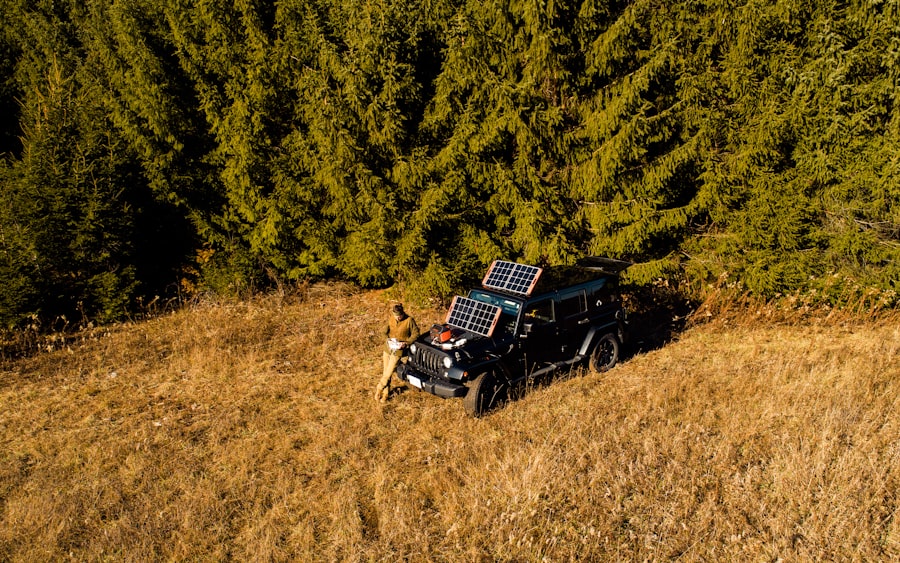
The practical utility of a solar generator is largely determined by its operational performance, encompassing its power output, battery capacity, and charging efficiency. Recent market reviews and expert tests provide valuable insights into the capabilities of current models.
Noteworthy Models and Their Specifications
The 2025 market reviews conducted by SolarReviews highlighted several models catering to different user requirements. The Anker SOLIX C300, introduced in late 2024, stands out as a best small generator with a 300W output and 288Wh capacity, suitable for charging small electronics and light-duty applications. For mid-range needs, the EcoFlow DELTA 3 Plus offers increased capacity and power. In the premium segment, the Bluetti Elite 200 V2, featuring compact automotive-grade cells, exemplifies the advancements in battery technology and efficiency.
Expert tests from 2026 by Good Housekeeping further broaden this perspective, showcasing models optimized for specific use cases. The Jackery HomePower 3000, with its substantial 3,072Wh capacity, is lauded as the best overall for outages and camping, indicating its capability to power multiple devices for extended periods. The Ecoflow RIVER 3 provides an excellent value proposition for those seeking an entry-level option, while the Anker SOLIX F1500 is specifically noted for its performance during blackouts. The Goal Zero Yeti 500, with its upgraded LiFePO4 battery, is recognized for camping applications, underscoring the importance of durable battery chemistry for prolonged outdoor use.
Battery Technology and Cycle Life
The type of battery chemistry employed significantly impacts a solar generator’s performance and lifespan. As noted, the adoption of LiFePO4 batteries, particularly in newer models like the Goal Zero Yeti 500, represents a substantial improvement over older lithium-ion chemistries. LiFePO4 batteries offer a longer cycle life (e.g., 4,000 cycles for the Yeti 500), enhanced safety, and better thermal stability, contributing to the overall durability and reliability of the generator. This extended cycle life translates directly into the practical lifespan of the unit, reinforcing its long-term economic value.
Charging Efficiency and Sun-Dependence
A key characteristic of solar generators is their reliance on sunlight for recharging. While this provides a clean and renewable energy source, it also introduces a dependency on weather conditions and daylight hours. Charging efficiency can vary based on panel quality, sun exposure, and temperature. This sun-dependence is a practical limitation; in extended periods of cloudy weather or during nighttime, the generator’s battery cannot be replenished via solar panels, necessitating recourse to AC wall charging if available. Users must therefore plan usage and charging schedules around anticipated solar availability.
Learn more technology news at AITV.
Practical Applications and Use Cases

The versatility of solar generators allows them to serve a wide array of practical applications, from off-grid living to emergency preparedness, making them a valuable asset for diverse consumer segments.
Emergency Preparedness and Power Outages
One of the most compelling use cases for solar generators is emergency preparedness. In regions susceptible to severe weather events, grid instability, or natural disasters, a solar generator can provide a critical source of backup power. Models like the Anker SOLIX F1500, specifically highlighted for blackouts, can power essential medical devices, communication equipment, refrigeration, or lighting, ensuring safety and comfort during extended outages. Their quiet operation and lack of emissions make them suitable for indoor use, a distinct advantage over noisy, fume-emitting fuel generators.
Off-Grid Living and Remote Work
For individuals pursuing an off-grid lifestyle, whether in cabins, RVs, or remote homesteads, solar generators offer a sustainable and often more practical alternative to full-scale grid connections. They provide the necessary power for basic amenities, electronic devices, and even some small appliances. The portability of these units also makes them ideal for temporary setups, allowing users to relocate their power source as needed. The scalability, where additional panels can be added, further enhances their suitability for varied off-grid power demands.
Recreational Activities and Outdoor Adventures
Camping, caravaning, and other outdoor recreational activities greatly benefit from the portability and silent operation of solar generators. They can power lights, charge phones, run portable refrigerators, and operate other small luxuries that enhance the outdoor experience. The Goal Zero Yeti 500, with its robust LiFePO4 battery, is specifically identified as an excellent option for camping, underscoring its suitability for rugged environments and sustained use away from conventional power sources. Their eco-friendly nature also aligns well with the principles of responsible outdoor recreation.
If you’re considering investing in solar generators, you might find it helpful to explore the benefits and features of advanced technologies in other areas, such as pet safety solutions. For instance, a related article discusses the advantages of advanced dog fences, which can provide peace of mind for pet owners while also being environmentally friendly. You can read more about it here. Understanding how these innovations work can help you make informed decisions about sustainable living and technology in your home.
Disadvantages and Considerations
While solar generators offer numerous advantages, a balanced assessment requires acknowledging their inherent limitations and potential drawbacks. Understanding these aspects is crucial for making an informed purchasing decision.
High Upfront Cost
Despite the long-term savings, the initial purchase price remains a significant barrier for some consumers. As noted, costs can range from hundreds to thousands of dollars, representing a substantial investment. This upfront expense must be weighed against the user’s budget, expected usage patterns, and the frequency of power outages or off-grid requirements. For sporadic, minimal use, the ROI might take longer to materialize compared to frequent, critical applications.
Sun-Dependent Charging and Battery Limits
As previously discussed, solar generators are inherently reliant on sunlight for recharging. This means that their performance can be compromised during prolonged periods of cloud cover, heavy rain, or at night. The rate at which the battery can be recharged also influences their utility. While AC wall charging offers an alternative, it negates the independence aspect. Furthermore, even with advanced battery chemistries, all batteries have a finite capacity and cycle life. Once the battery is depleted and no solar input is available, the generator ceases to provide power until recharged, highlighting a limitation in environments with unreliable sun exposure.
Capacity and Power Output Limitations
While contemporary solar generators offer increasing power output and battery capacities, they may not be suitable for powering all household appliances simultaneously or for extended periods. High-wattage appliances, such as electric ovens, central air conditioning units, or large electric heaters, typically exceed the sustained output capabilities of most portable solar generators. Residential solar systems are usually required for such demands. Consumers must carefully match the generator’s specifications (wattage, Wh capacity) to their anticipated power needs to avoid disappointing performance.
Conclusion: Weighing the Benefits Against the Limitations
The question of whether a solar generator is “worth it” does not yield a universally affirmative or negative answer. Instead, its value proposition is contingent upon individual needs, priorities, and usage scenarios. For those seeking independence from the grid, a reliable backup power solution for emergencies, or a sustainable energy source for off-grid living and recreational activities, the investment in a solar generator can indeed be worthwhile. The long-term savings on fuel and electricity, coupled with a lifespan of 25-30 years and minimal maintenance, present a compelling economic argument.
Modern models, as highlighted by 2025 market reviews and 2026 expert tests, offer increasingly robust performance, improved battery technology (e.g., LiFePO4), and a range of capacities to suit various demands. From the compact Anker SOLIX C300 to the high-capacity Jackery HomePower 3000, the market provides diverse options.
However, prospective buyers must critically consider the initial high upfront cost, the inherent dependence on sunlight for recharging, and the practical limits of battery capacity and power output for very high-demand appliances. For those with sporadic, low-power needs, a smaller, more affordable unit might suffice, while more intensive users might find the investment in a higher-capacity unit or even a residential solar setup more appropriate.
Ultimately, a solar generator stands as a potent symbol of energy resilience and sustainability. Its value lies not just in its ability to produce electricity, but in the peace of mind it offers during outages, the freedom it grants in remote settings, and its contribution to a cleaner energy future. For the right user, with a clear understanding of its capabilities and limitations, a solar generator represents a sound and forward-thinking investment.
FAQs
What is a solar generator?
A solar generator is a device that uses solar panels to convert sunlight into electricity, which is then stored in a battery for later use. It can be used to power small appliances, electronics, and even some larger devices depending on the size and capacity of the generator.
How does a solar generator work?
Solar generators work by capturing sunlight with solar panels, which then convert the sunlight into electricity through a process called the photovoltaic effect. The electricity is then stored in a battery for later use, allowing for off-grid power supply.
What are the benefits of having a solar generator?
Some benefits of having a solar generator include the ability to generate clean and renewable energy, reduced reliance on traditional power sources, and the ability to have power during emergencies or in remote locations. Additionally, solar generators are low maintenance and can provide long-term cost savings.
What are the limitations of a solar generator?
The limitations of a solar generator include the initial cost of purchasing and installing the system, the reliance on sunlight for power generation, and the limited capacity for powering larger appliances or devices. Additionally, solar generators may not be suitable for areas with limited sunlight.
Is a solar generator right for me?
Whether a solar generator is right for you depends on your specific energy needs, location, and budget. If you are looking for a clean and renewable energy source, want to be prepared for power outages, or need power in remote locations, a solar generator may be a good option for you. It’s important to consider the upfront costs and the potential long-term savings when making this decision.